

World Health Organization (WHO) is a specialized agency of the United Nations (UN) responsible for international public health. Headquartered in Geneva, Switzerland, it leads and coordinates global efforts to prevent disease, promote health, and respond to health emergencies worldwide.
Overview
Type: United Nations specialized agency
Abbreviation: WHO
Headquarters: Geneva, Switzerland
Established: 7 April 1948
Director-General: Tedros Adhanom Ghebreyesus (current, as of latest data)
Mission: To achieve “the highest possible level of health” for all people.
The WHO is the largest intergovernmental body dedicated to public health, with 193 member states. It works with governments, partners, scientists, and communities to fight communicable and non-communicable diseases, standardize medical practices, and provide health guidance.
History
The WHO was created by the United Nations on 7 April 1948, when its Constitution came into force, following international discussions after World War II about the need for global health cooperation. Its roots include earlier organizations such as the League of Nations’ Health Organization and the International Office of Public Hygiene.
World Health Day, celebrated annually on 7 April, marks the organization’s founding and highlights a major global health theme each year.
Functions and Work
The WHO’s work includes:
Monitoring global disease outbreaks and health trends
Setting international health standards and guidelines
Providing technical support to countries
Coordinating responses to health emergencies such as epidemics
Promoting universal health coverage and healthy lifestyles
Publishing research and data, including the World Health Report and the Bulletin of the World Health Organization.
The WHO also defines health broadly, as a state of complete physical, mental, and social well-being, not merely the absence of disease.
Headquarters and Structure
The WHO is headquartered in Geneva and operates through six regional offices and many country offices around the world, tailored to local health needs. It is governed by the World Health Assembly (WHA), which meets annually and elects an executive board of health experts.
Stamps and Commemoration
Postal administrations around the world have issued stamps commemorating WHO milestones and public health themes:

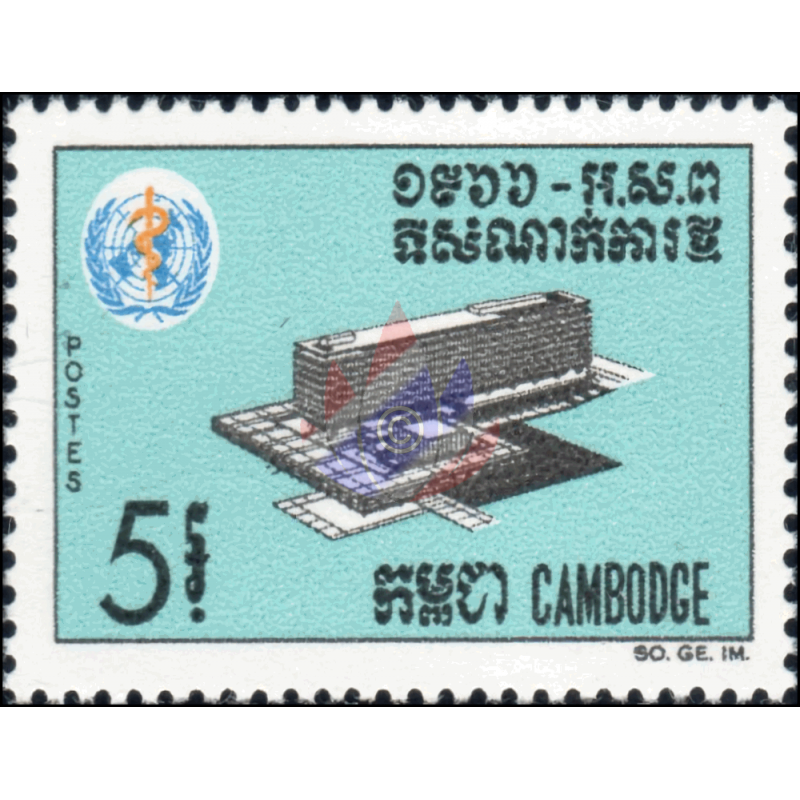
Cambodia stamp showing the inauguration of WHO headquarters.
Soviet Union 1988 stamp marking the 40th anniversary of WHO with its emblem.
Philatelic collections reflect WHO’s role in global health campaigns (e.g., smallpox eradication, anti-malaria efforts, child health) and its emble.
Recent Developments
In the mid-2020s WHO has faced organizational restructuring and funding challenges, particularly after the United States completed its withdrawal in early 2026 — a controversial move affecting global health cooperation and financing.
Some subnational entities (like states or cities) have sought alternative ways to engage with WHO systems after the withdrawal to maintain access to outbreak alerts and response networks.
See Also
Global Health
International Health Regulations
World Health Day
Member States of WHO
Genuine Information (GIO)


No comments:
Post a Comment